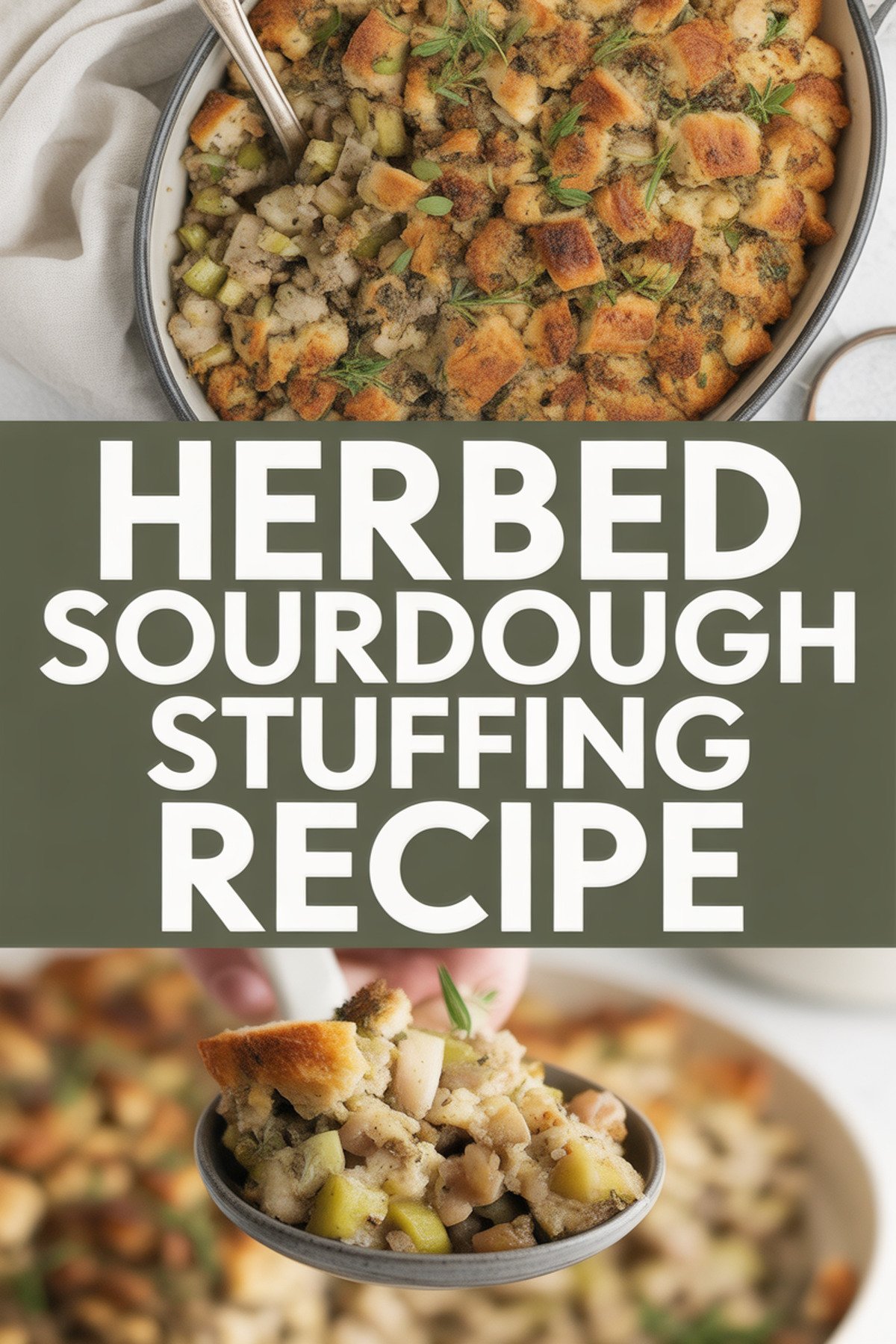
Herbed Sourdough Stuffing Recipe
Herbed sourdough stuffing has become a reliable staple in my kitchen, especially during holiday meals and family dinners. I love how the tangy sourdough bread absorbs the savory broth and herbs, creating a moist yet textured dish. The aroma of fresh sage, thyme, and rosemary fills the kitchen as it bakes, signaling comfort and tradition.
I usually serve it alongside roasted turkey or chicken, but it also pairs well with pork or a simple vegetable roast. The balance of herbs and the slight chew from the sourdough make it stand out from typical stuffing recipes. It’s a dish I return to because it’s straightforward, forgiving, and always satisfying.
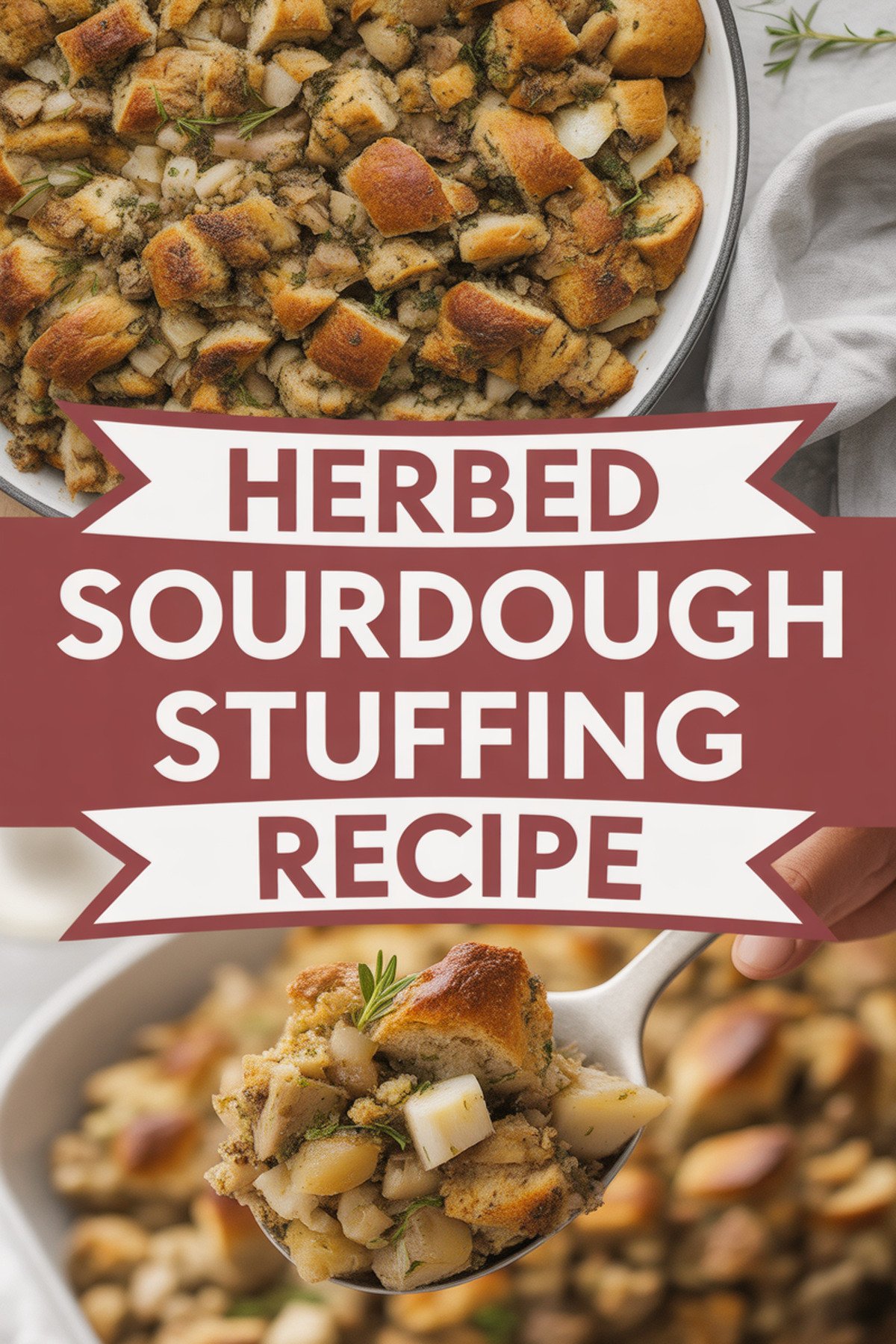
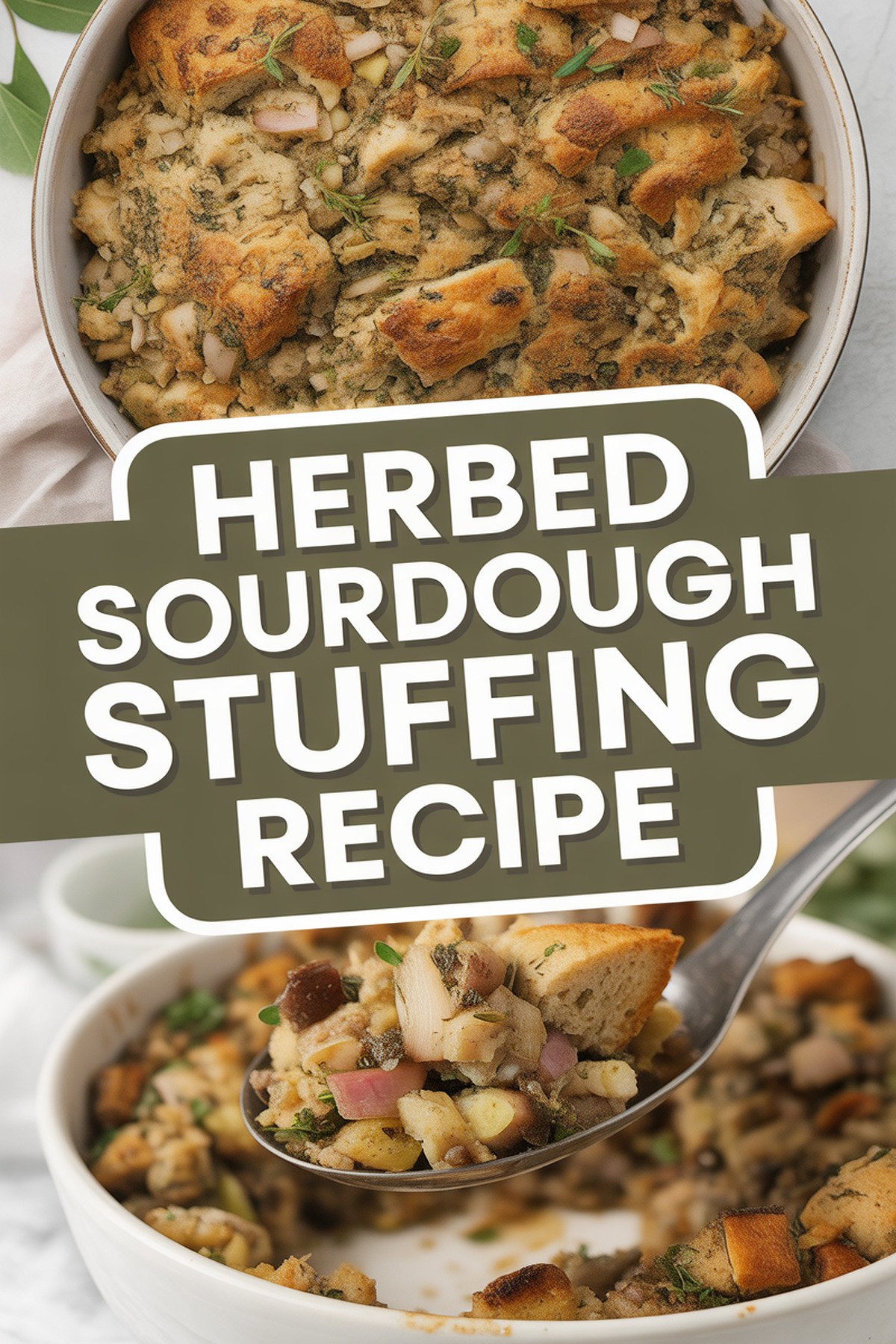
The texture is key: crisp edges with a soft, flavorful interior. It’s a recipe that feels both rustic and refined, perfect for sharing with family or bringing to a potluck. Making it from scratch means I can adjust the herbs and seasoning to my taste every time.
Quick Facts
| Servings | 4 servings |
|---|---|
| Prep Time | 10 minutes |
| Cook Time | 15 minutes |
| Total Time | 25 minutes |
Why You’ll Love It
This herbed sourdough stuffing is a dependable side that brings depth and freshness to any meal. It combines the tang of sourdough with classic herbs for a comforting yet vibrant flavor profile.
- Reliable weeknight option
- Minimal ingredients
- Rich, crowd-pleasing flavor
- Scales well for guests
Ingredients
Gathering fresh herbs and quality sourdough bread is key to this recipe. The ingredients list is straightforward and uses pantry staples, making it easy to prepare anytime you have leftover bread.
- 10 cups day-old sourdough bread, cut into 1-inch cubes
- 1/2 cup unsalted butter
- 1 large onion, finely chopped
- 3 celery stalks, finely chopped
- 3 cloves garlic, minced
- 1/4 cup fresh parsley, chopped
- 2 tablespoons fresh sage, chopped
- 1 tablespoon fresh thyme leaves
- 1 tablespoon fresh rosemary, chopped
- 1 teaspoon salt
- 1/2 teaspoon black pepper
- 2 1/2 cups low-sodium chicken or vegetable broth
- 2 large eggs, beaten
Step-by-Step Instructions
Follow these steps carefully to build flavor and achieve the ideal stuffing texture. The key is to sauté the vegetables and herbs before combining with the bread and broth, then bake until golden and set.
- Preheat your oven to 350°F (175°C). Grease a 9×13-inch baking dish.
- Spread the sourdough cubes on a baking sheet and toast in the oven for 10-15 minutes until lightly crisp but not browned. Remove and set aside.
- In a large skillet, melt the butter over medium heat. Add onion and celery, cooking until softened, about 5-7 minutes.
- Add garlic, parsley, sage, thyme, and rosemary to the skillet. Cook for another 2 minutes until fragrant.
- In a large mixing bowl, combine the toasted bread cubes with the sautéed vegetable and herb mixture. Season with salt and pepper.
- Whisk together the broth and beaten eggs, then pour over the bread mixture. Toss gently to combine, ensuring the bread absorbs the liquid evenly.
- Transfer the mixture to the prepared baking dish, pressing down lightly to compact.
- Cover with foil and bake for 30 minutes. Remove foil and bake an additional 15 minutes until the top is golden and slightly crisp.
- Let the stuffing rest for 5 minutes before serving.
Chef Tips
These tips will help you get the best texture and flavor from your stuffing. Small adjustments can make a big difference in the final dish.
- Use day-old bread to avoid soggy stuffing.
- Toast bread cubes to add crunch and prevent mushiness.
- Don’t skip sautéing the herbs and vegetables for deeper flavor.
- Add broth gradually to control moisture level.
- Cover while baking to keep stuffing moist, uncover for a crispy top.
Substitutions
If you need to adjust ingredients due to availability or preference, here are some practical substitutions that won’t compromise the dish.
- Use whole wheat or multigrain bread instead of sourdough for a different texture.
- Swap butter for olive oil for a dairy-free option.
- Replace chicken broth with vegetable broth to keep it vegetarian.
- Use dried herbs if fresh aren’t available, but reduce quantity by half.
- Omit eggs to make it vegan; add extra broth to bind.
Storage & Reheating
Proper storage and reheating will keep your stuffing fresh and delicious for days after cooking. Follow these guidelines to avoid dryness or sogginess.
- Store leftovers in an airtight container in the refrigerator for up to 3 days.
- Reheat covered in the oven at 350°F (175°C) until warmed through, about 15-20 minutes.
- Freeze stuffing in a sealed container for up to 2 months; thaw overnight in the fridge before reheating.
- Add a splash of broth before reheating to restore moisture if needed.
Perfect Pairings
This stuffing pairs well with a variety of dishes and drinks, making it a versatile addition to your meal.
- Roasted turkey or chicken
- Glazed ham
- Steamed green beans or roasted Brussels sprouts
- Dry white wine like Chardonnay or Sauvignon Blanc
FAQs
Here are answers to common questions about making and customizing this herbed sourdough stuffing.
Can I prepare the stuffing ahead of time?
Yes, you can assemble it the day before, cover, and refrigerate. Bake it fresh when ready to serve.
What if I don’t have fresh herbs?
Dried herbs can be used at half the amount, but fresh herbs provide better flavor and aroma.
How do I make this stuffing vegan?
Replace butter with olive oil, use vegetable broth, and omit eggs or substitute with a flax egg.
Can I add sausage or nuts?
Yes, cooked sausage or toasted nuts like pecans can be added for extra flavor and texture.
Why is it important to toast the bread cubes?
Toasting helps the bread hold its shape and creates a nice contrast between crispy edges and soft interior.
Nutritional Note
This stuffing provides moderate calories primarily from bread and butter, with protein from eggs and fiber from herbs and vegetables. Exact values vary based on portion size and ingredient brands.