Embroidered napkin edge designs bring quiet charm to a table. Napkin edge embroidery, from scallops to vines, turns plain linen into keepsakes.
These embroidered edging ideas mix thread, texture, and tiny details that catch the light and frame every plate with a gentle finish.
I learned to appreciate embroidered napkin edge designs while helping my grandmother prepare Sunday dinners; her hemstitch napkin edges and delicate picots still guide my hands. This collection gathers napkin edge embroidery styles that suit casual breakfasts, holiday gatherings, and heartfelt gifts, all stitched with patience and joy.
Hemstitch Border With Satin Flower Corners
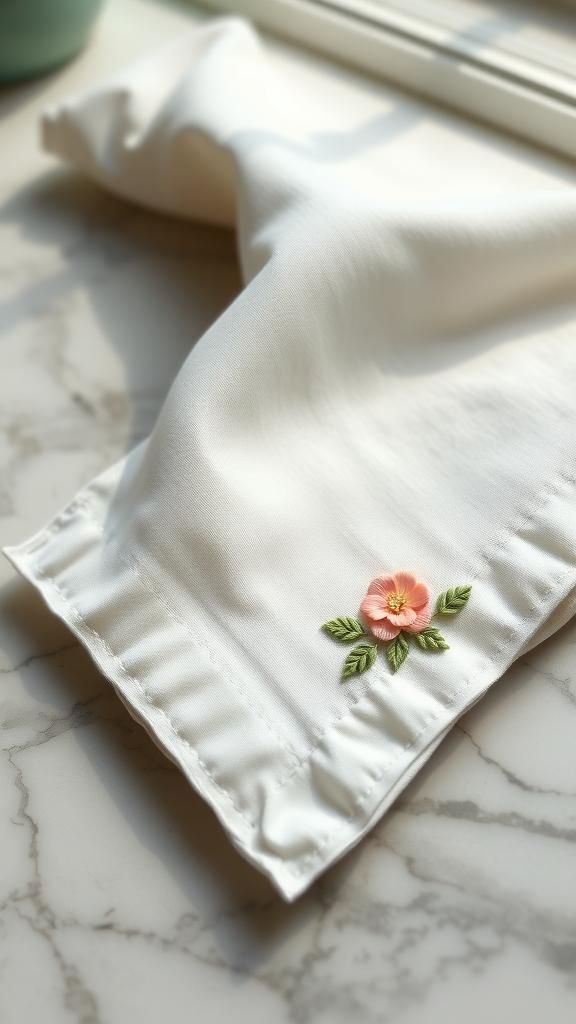
A hemstitch base sets a graceful stage for satin-stitched blossoms at each corner, bringing a linen napkin an heirloom attitude. The materials palette leans toward fine linen, cotton or silk floss, and a light stabilizer that keeps edges crisp.
Pale neutrals look serene, while cornflower blue or blush rose adds color without loudness. Tiny satin petals mirror antique table linens and pair beautifully with china patterns and candlelight.
Gift sets tie nicely with narrow silk ribbon in a small box. Displayed on a wooden charger or marble tray, the border glows with quiet, classic poise.
Steps
- Mark a narrow border and corner flower placements on pressed linen.
- Hoop the fabric and work hemstitch along the drawn edge.
- Fill the corner motifs with satin stitch, adding tiny leaf accents.
- Steam lightly from the back and let the linen dry flat.
Soft Scalloped Edge With Seed Stitch Dots

Gentle scallops turn the edge into a lace-like outline, dotted with tiny seed stitches that sparkle in the light. Cotton or linen napkins welcome perle cotton or glossy rayon for a slight sheen.
White-on-white echoes vintage trousseau linens, while mint, saffron, or navy adds a modern note. The scallop rhythm suits brunch tables, baby showers, and garden teas, forming a sweet frame around porcelain cups and fresh flowers.
Bundled in sets of four with tissue and twine, this design suits host gifts. Stacked in a basket, the dots read like pearls along a wave.
Steps
- Trace a scalloped guideline around the hemmed napkin.
- Hoop the edge area and work blanket or buttonhole stitches to form scallops.
- Place evenly spaced seed stitches inside each curve.
- Block the napkin edges lightly so the scallops lay smooth.
Embroidered Picot Loops Along A Fine Hem
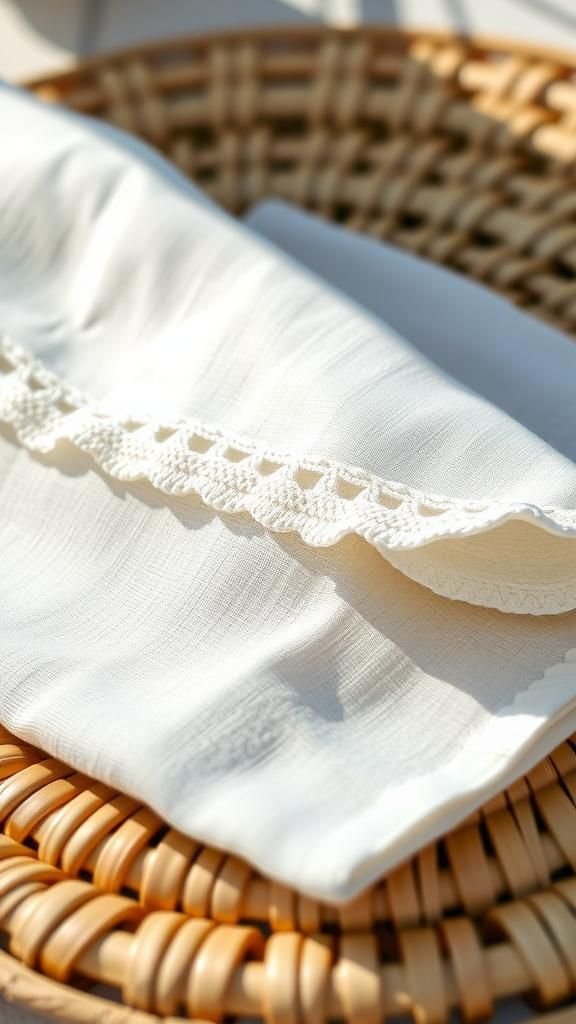
Picot loops form airy little crowns hugging a refined hem, lending a lace-like finish without added trim. A crisp cotton or linen base balances delicate loops done in perle cotton or silk floss.
Ivory, champagne, and dove gray emphasize texture, while coral or teal brings a playful accent for beachy settings. The look pairs with glassware and airy linens on summer patios.
Wrapped as a trio around a linen bread basket, the loops peek out in a charming line. Presented in a slim kraft box with vellum, the edging reads refined yet lively.
Steps
- Lightly mark evenly spaced points along the hem edge.
- Hoop the napkin and stitch picot loops at each marked point.
- Work a reinforcing line of small stitches beneath the loops.
- Steam from the back and shape the loops with gentle finger tension.
Ladder Stitch Windows With Monogrammed Corners

Delicate ladder stitch creates tiny open windows along the border, while a single-letter monogram anchors each corner. This blend feels crisp and personal on flax-toned linen or bleached white cotton.
Monograms in silk floss shimmer gently; matte perle cotton brings structure. Navy, charcoal, or antique gold stands out against neutrals, while tone-on-tone suggests quiet luxury.
Perfect for wedding brunches or milestone dinners, the edge frames plates without stealing attention. Gifted in pairs with a matching tea towel, these napkins store beautifully folded in a lidded linen box, ready for thoughtful entertaining.
Steps
- Draw a narrow border and mark ladder stitch spacing.
- Hoop the edge and work ladder stitch to form open windows.
- Stitch a simple corner monogram in satin or padded satin.
- Press lightly on the reverse to smooth the border.
Running Stitch Wave Inspired By Ric-Rac Trim

A playful ric-rac silhouette appears through undulating lines of running stitch, offering movement without bulk. The palette sings with contrasting tones such as mustard on cream, indigo on oyster, or sunset pink on pale gray.
Fine cotton floss keeps the line crisp, while wool-acrylic blends add softness. The vibe suits picnics and cheerful breakfasts, pairing with enamelware and gingham accents.
Bundled in a tin with parchment dividers, the set feels nostalgic and fun. Displayed on a slate board or bright melamine tray, the wave reads lively from every angle.
Steps
- Sketch a gentle ric-rac wave along the edge.
- Hoop the napkin and follow the line with even running stitches.
- Add a second offset line for a bouncy double-wave effect.
- Steam the edge to relax the fabric and settle the stitches.
Two-Tone Herringbone Edge With Corset Look
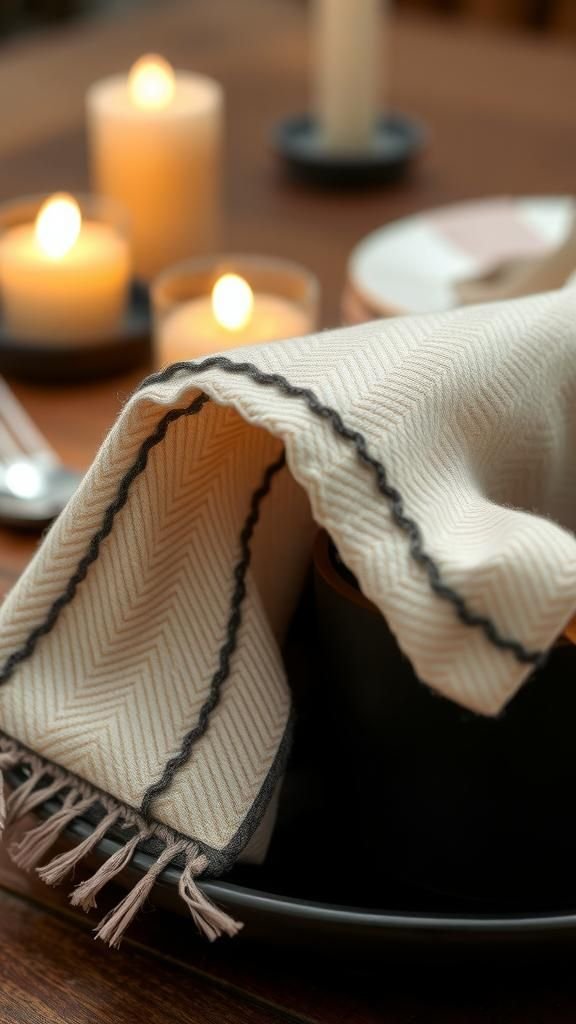
Interlaced herringbone lines create a corset-like lattice hugging the hem, best shown in two contrasting threads. Linen with a slight slub adds texture beneath smooth strands of cotton or silk.
Charcoal with blush or forest with sage gives contrast without harshness. The structure feels polished and modern beside stoneware plates and brushed flatware.
A set wrapped in tissue with a narrow leather tie makes a refined housewarming gesture. On the table, the crisscross glints subtly under candlelight, giving an elevated finish to weeknight meals and celebratory spreads alike.
Steps
- Mark two parallel lines along the edge.
- Hoop the napkin and stitch herringbone across the gap with color A.
- Interlace a second herringbone path in color B through the first.
- Press from the wrong side to keep the lattice crisp.
Blanket Stitch Fringe With Gentle Ombre Threads

A neat blanket stitch secures a tidy fringe, while ombre thread shifts through soft gradations that echo sunsets and shorelines. Cream linen lets the color change sing, though charcoal or olive napkins bring a moody counterpart.
Perle cotton accentuates the edge with a round profile, and matte cotton floss feels classic. Suited to alfresco dinners and wine-and-cheese evenings, the fringe adds relaxed movement.
Rolled into a cylinder and tied with baker’s twine, the set looks inviting in a wicker hamper. On a textured charger, the color drift catches the eye.
Steps
- Measure and tease a short fringe along the napkin edge.
- Hoop the edge and work blanket stitch to secure the fringe line.
- Switch through ombre sections as the border progresses.
- Comb the fringe lightly and steam from the back.
Stem Stitch Piped Edge Illusion In Neutrals

Parallel stem stitches form the look of piping without added trim, lending a tailored outline to cotton or linen napkins. Neutral palettes like stone, taupe, and warm gray feel urbane, while a thin inner line of olive or rust warms the scheme.
The subtle relief pairs well with matte ceramics and linen runners. Sets tie nicely with cotton tape and a wax-sealed tag, ready for gifting.
The edge meets modern interiors with a quiet, architectural attitude, framing plates and glassware while keeping the spotlight on food and conversation.
Steps
- Draw two close parallel lines near the hem.
- Hoop the edge and work stem stitch along the outer line.
- Add a second row just inside to mimic piping.
- Steam gently to settle the stitches into the weave.
Chain Stitch Vine Border With Tiny Leaves
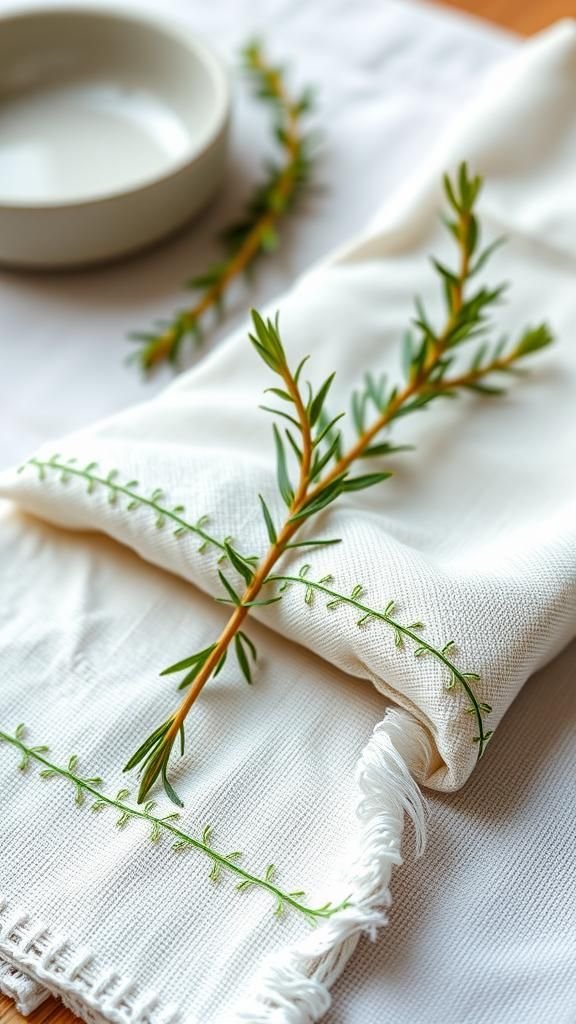
A meandering chain stitch vine winds around the napkin, dotted with petite leaves that feel fresh and botanical. Linen in ivory or pale sage provides a leafy backdrop, while threads in eucalyptus, moss, and fern create layered greens.
Occasional berries in muted garnet or gold bring small spark points. The motif suits brunch with citrus and herbs, and it blends beautifully with hand-thrown ceramics.
Bundled with sprigs of rosemary and kraft wrap, the set offers garden charm. On rattan chargers, the organic line drifts like a hedgerow around each place setting.
Steps
- Lightly sketch a vine path along the border.
- Hoop the napkin and stitch the path in chain stitch.
- Add small detached chain leaves and seed berries along the vine.
- Press from the reverse to smooth the border.
Prairie Eyelet Edge With French Knot Accents
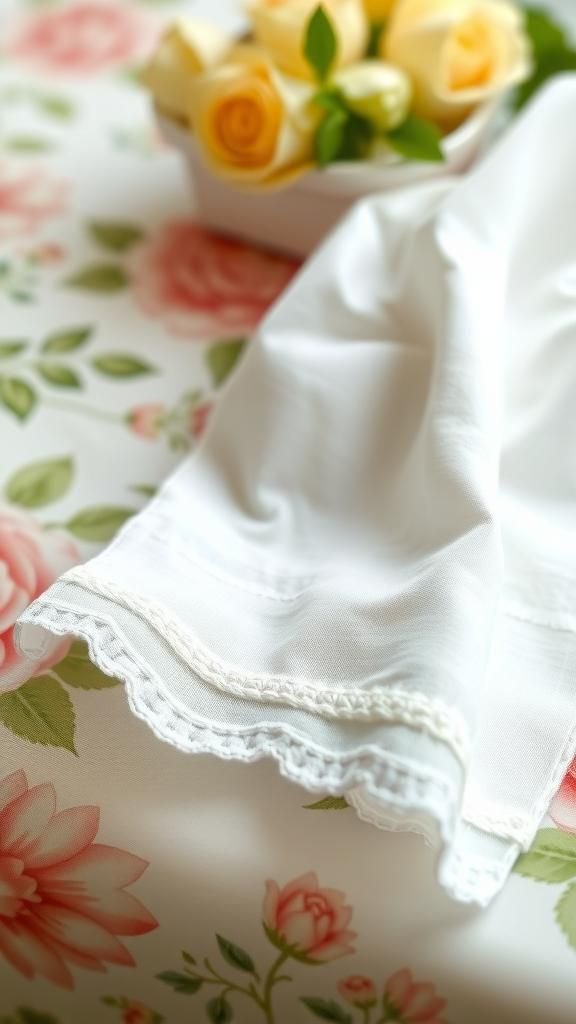
Eyelet-style openings framed by embroidery stitches give a charming prairie feel, softened by clusters of French knots. A crisp white napkin introduces brightness, while wheat, sky, or butter thread warms the edge.
The look pairs with vintage glass tumblers and floral tablecloths for nostalgic gatherings. Cotton floss creates a matte story; mercerized thread adds sheen.
Bundled in floral paper with twill tape, the set feels sweet and timeless. Layered over a gingham runner, the eyelets and knots read like wildflowers and seed pods circling a meadow path.
Steps
- Mark evenly spaced eyelet positions along the edge.
- Hoop the fabric and work eyelet stitches to form small openings.
- Scatter clusters of French knots between the eyelets.
- Block and steam to define the openings cleanly.
Chevron Whipstitch Edge With Subtle Metallic Gleam

A chevron path runs along the border, brought alive by whipstitch strokes and a touch of metallic filament. The interplay of matte cotton with a hint of shimmer gives evening tables a quiet sparkle.
Charcoal napkins support gold or copper, while pale stone favors silver or pewter. The geometry feels modern beside smoked glass and brushed flatware.
Wrapped in charcoal tissue and a metallic cord, the set lands perfectly for anniversary dinners or New Year toasts. On a black slate charger, the zigzag line shines like a heartbeat around each plate.
Steps
- Draw a chevron guideline parallel to the edge.
- Hoop the border and stitch a base zigzag path.
- Work whipstitch over the path, blending in metallic thread.
- Steam lightly to relax any puckering along the line.
Beaded Blanket Edge With Glass Seed Highlights
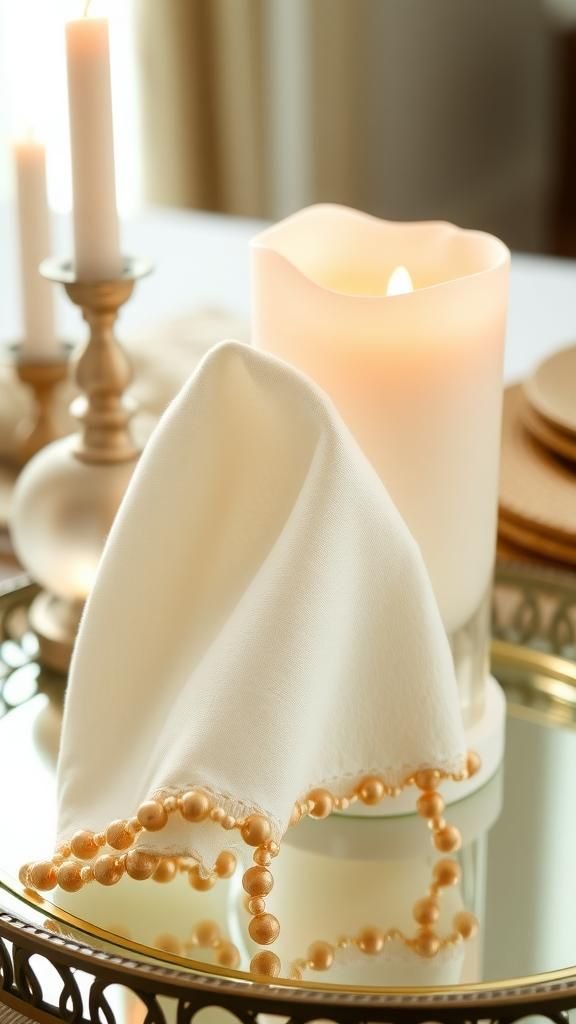
Glass seed beads nestle into a blanket-stitched edge, lending sparkle that catches candlelight. Ivory linen glows with opal or champagne beads, while indigo cotton marries beautifully with gunmetal or hematite.
The thread base in perle cotton holds structure, and silk thread secures the beads with a graceful luster. Suited to evening tables, tasting menus, and small celebrations, the shimmer plays well with crystal and polished flatware.
Presented in a velvet pouch or satin-lined box, the napkins feel gift-ready. On a mirrored tray, each bead line reflects like a delicate necklace.
Steps
- Mark a tight edge border around the napkin.
- Work blanket stitch along the hem to build the base.
- Add seed beads at regular intervals along the blanket bites.
- Steam from the back and let the beads settle into place.
Lace Applique Rim Framed By Hand Embroidery
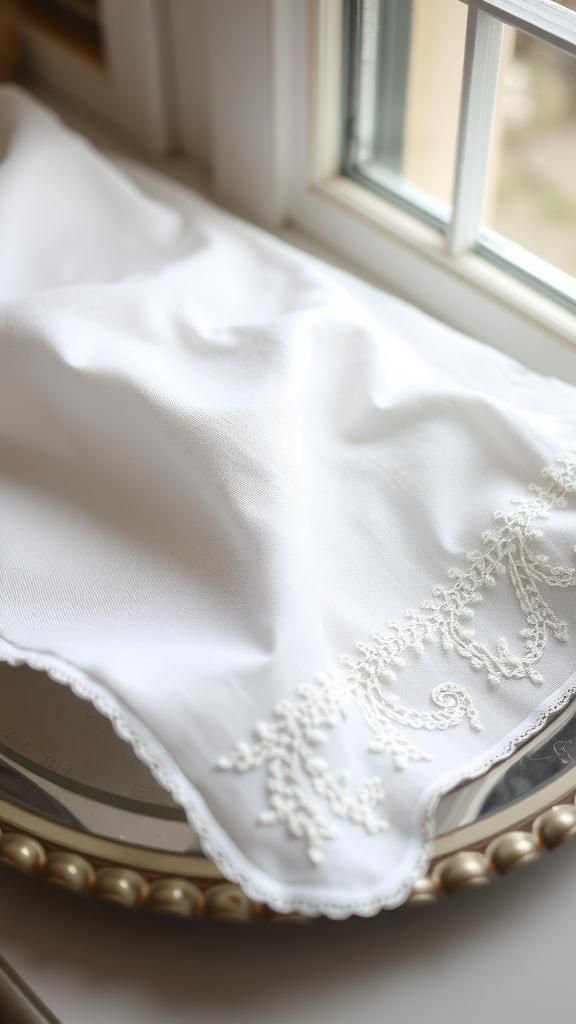
A delicate lace strip sits along the rim, its edges framed by fine embroidery that blends fabric and thread into one border. Sheer cotton lace over linen creates airy layers, while tonal stitching keeps the finish cohesive.
Shades of ivory, ecru, and soft gray suit romantic dinners and bridal teas. Cotton floss outlines the lace motifs and anchors the trim visually.
Wrapped with a silk bow and a pressed flower card, the set feels special from the outset. Arranged on vintage silver trays, the lace reads like a whisper around each setting.
Steps
- Position lace along the napkin edge and baste lightly.
- Hoop the area and outline motifs with small even stitches.
- Secure edges with fine overcast or tiny couching stitches.
- Steam from the reverse and remove basting threads.
Ginkgo Leaf Corners And Clean Linear Edge
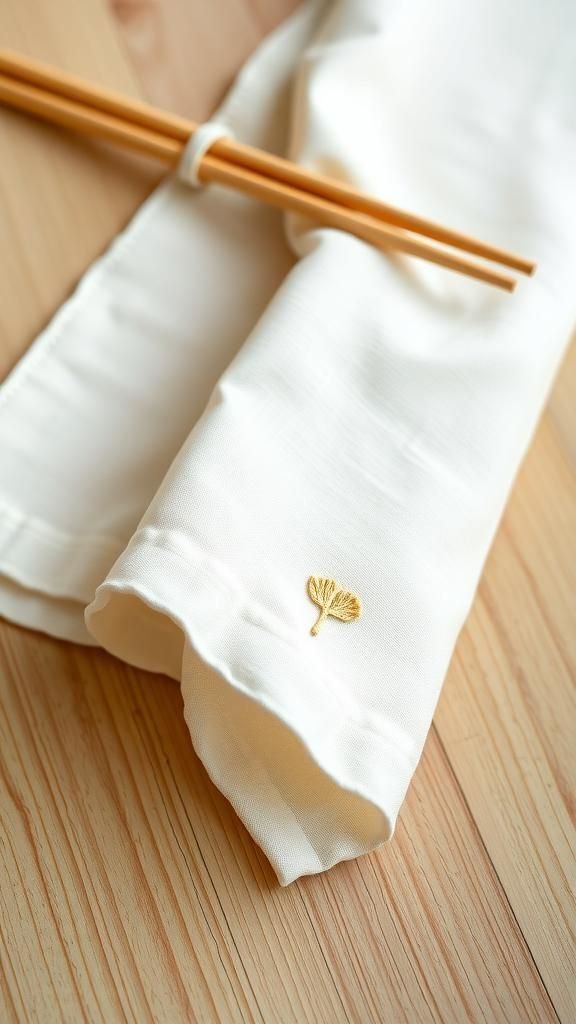
Stylized ginkgo leaves sit at the corners, their fan shapes connected by a calm linear border. Warm ochre, moss, and charcoal suit the botanical mood, while ivory linen keeps the palette grounded.
Satin and long-and-short stitches bring gentle gradients to each leaf. The look harmonizes with ceramic sake cups, bamboo chargers, and stone platters for an earthy table.
Bundled as a quartet with kraft wrap and a leaf tag, it makes a thoughtful host present. On natural wood, the ginkgo forms a mindful pause at every corner.
Steps
- Mark corner leaf outlines and a straight edge guide.
- Hoop the corners and fill leaves with satin and shading stitches.
- Stitch a clean linear border connecting corners.
- Press on the reverse to preserve the shapes.
Nautical Rope Edge With Tiny Anchor Motifs
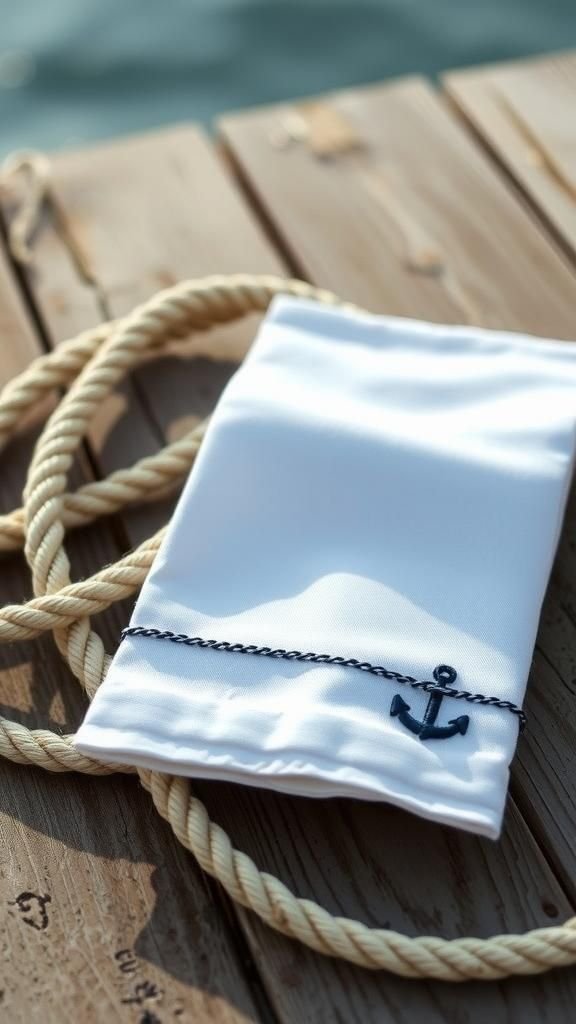
Twisted rope lines run along the edge, punctuated by miniature anchors at the corners. Indigo, navy, and sand threads suit maritime themes, while bleached cotton napkins echo sails and sun.
Rope texture appears through padded lines and stem stitch curves, with anchors in satin and backstitch. Perfect for seafood dinners on the deck, paired with enamelware and striped runners.
Gifting feels charming bundled with a sailor knot tag and kraft box. On a weathered plank table, the rope border reads crisp and spirited, guiding the eye in a steady loop.
Steps
- Lightly draw a rope twist path around the edge.
- Hoop the napkin and work padded lines for the rope effect.
- Embroider tiny anchor motifs at each corner.
- Steam from the back and smooth the rope curves.
Holiday Holly Border With Berry Cluster Corners
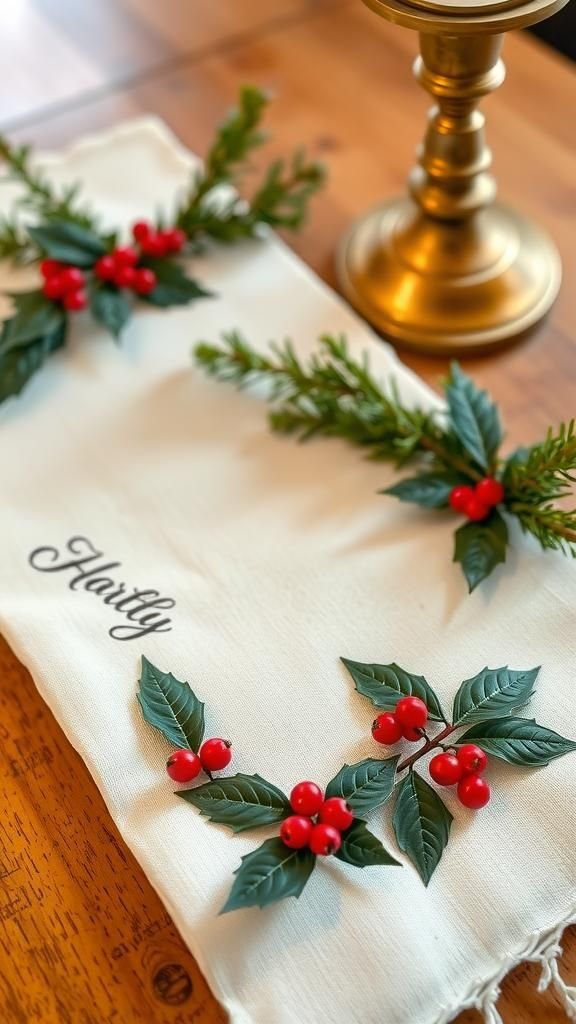
Holly leaves glide along the border, arriving at corners where berry clusters gather like tiny ornaments. White or flax linen lets emerald greens and cranberry reds glow, while a touch of gold backstitch adds festive sparkle.
Satin and fishbone stitches bring leaf veins into focus. The design pairs with tartan runners, evergreen sprigs, and brass candlesticks for seasonal tables.
Presented as a tied bundle with a sprig of cedar, it slips easily into a hostess basket. On porcelain with gold rims, the edge looks cheerful and warm.
Steps
- Sketch leaves and berries around the border with marked corners.
- Hoop the edge and fill leaves with fishbone stitch.
- Work berry clusters in French knots and add gold details.
- Press from the reverse to keep the sheen intact.
Citrus Scallop Edge With Seed Stitch Pith

Rounded scallops evoke sliced citrus, with seed stitches forming a playful pith effect along each curve. Lemon, mandarin, and lime threads energize white cotton napkins, while soft melon tones feel mellow and sunny.
Satin outlines and tiny seeds create dimension without weight. This border suits brunch tables loaded with fruit and fresh pastries.
Packed in a bright citrus-print sleeve, the set turns into a cheerful hostess gift. Arranged on woven placemats, the scallops flicker like sunshine around the plate, hinting at zest and sweetness in every course.
Steps
- Trace scallops around the edge and mark seed positions.
- Hoop the border and outline scallops with satin or split stitch.
- Fill pith seeds within each scallop using small seed stitches.
- Steam lightly to prevent ripples along the curves.
Art Deco Fan Edge With Satin Lines
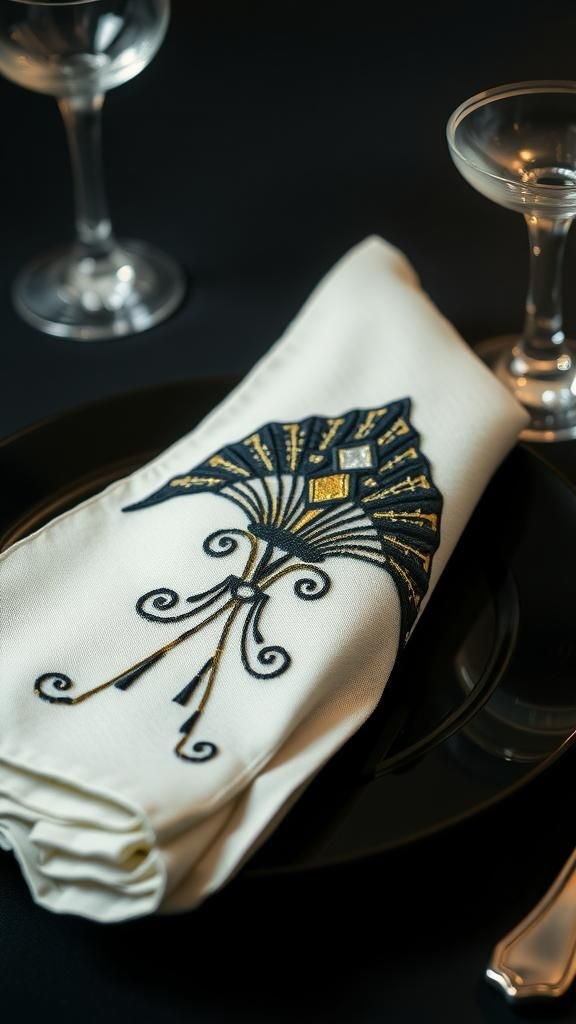
Radiating fan motifs repeat along the edge, their satin lines forming geometry inspired by grand ballrooms. Cream linen sets the stage for black, emerald, or antique gold thread, while a thin accent line links each fan.
The sheen of satin brings crisp highlights that pair with mirrored trays and coupe glasses. Boxed in black tissue with a foil-stamped card, the set suits cocktail parties and anniversary dinners.
On a glossy lacquer charger, the fans arc neatly, giving the border an elegant rhythm that feels both nostalgic and fresh.
Steps
- Mark repeating fan outlines around the border.
- Hoop each section and fill rays with satin stitch.
- Connect fans with a fine linking line along the hem.
- Press on the back to keep the satin smooth.
Boho Rainbow Edge In Variegated Cotton Floss

A continuous arc of color runs the perimeter through variegated floss, forming soft rainbow shifts that feel relaxed and joyful. Natural linen enhances the hand-dyed look, while a second neutral line adds definition.
The thread’s changing tones move from warm to cool with unforced ease. Perfect for casual lunches, outdoor gatherings, and kids’ parties, this border pairs with enamel cups and patterned plates.
Gifted in a muslin bag stamped with a tiny rainbow, the set charms instantly. Stacked on a painted picnic table, the colors glow like festival streamers.
Steps
- Lightly mark the edge path and place the fabric in a hoop.
- Work an even backstitch or split stitch with variegated floss.
- Add a narrow neutral line just inside for definition.
- Steam and lay flat until fully dry.
Minimal Dash Border In Even Running Stitches

Tiny dashes form a neat border of running stitches that reads modern and clean. The simplicity invites thoughtful color choices: charcoal on white, clay on flax, or sky on stone.
Fine cotton floss gives a slender line, while perle cotton creates a bolder punctuation. This edge partners with minimalist ceramics and plain linen runners, letting texture and tone carry the table.
A quartet tied with paper tape and a printed label slides easily into a gift basket. On a concrete-look placemat, the little dashes form a quiet, reassuring frame.
Steps
- Mark a straight guideline around the napkin.
- Hoop the edge and stitch evenly spaced running stitches.
- Turn corners with consistent spacing to maintain rhythm.
- Press from the back to set the stitching.
Wildflower Meadow Edge With Mixed Stitch Textures
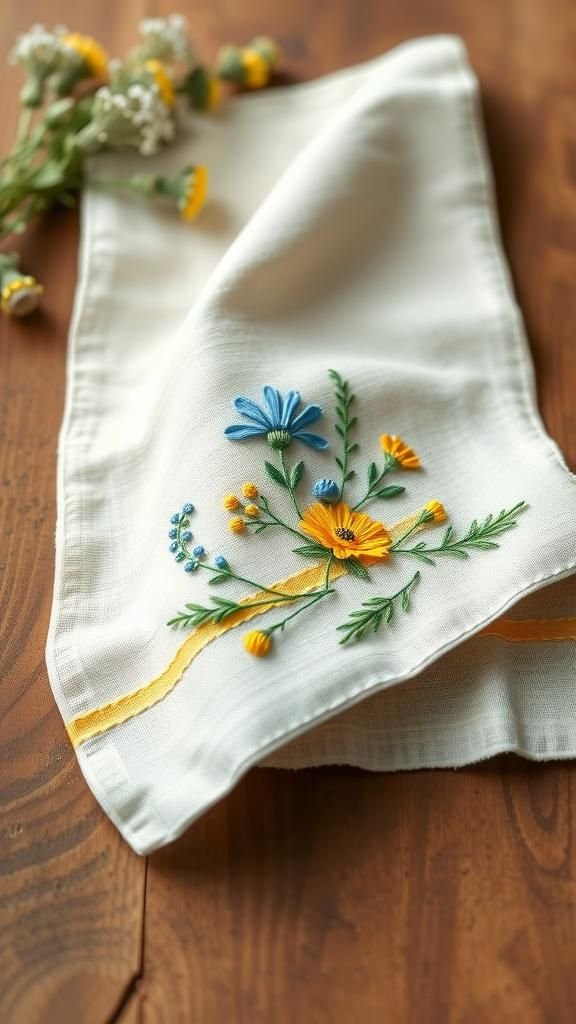
Scattered blooms and grasses drift along the edge like a meadow path, blending lazy daisy petals, straight-stitch blades, and tiny knots. Linen in oatmeal or soft white sets a pastoral mood, while thread shades of cornflower, buttercup, and clover dance through the border.
The mix pairs with hand-thrown pottery and linen runners for relaxed meals. A ribbon-tied stack with a pressed wildflower card makes a thoughtful gift for gardeners.
Set on a farmhouse table, the border feels breezy and light, as if a field wandered in from outside.
Steps
- Sketch small flowers and grasses around the border.
- Hoop sections and work petals, stems, and knots in mixed stitches.
- Vary color clusters to mimic a natural scatter.
- Steam from the reverse and let fibers relax.