Fabric Covered Lamp Shade Ideas bring warmth, texture, and personality to any corner, and these fabric-covered lampshade ideas can turn overlooked bases into favorite accents. My first fabric lamp shade was a quick refresh for a flea-market find, and the right fabric-covered lamp shade turned that wobbly relic into a conversation piece.
Since then, brainstorming Fabric Covered Lamp Shade Ideas has become a favorite weekend ritual.
A gallery of fabric covered lampshades can shift a room’s mood in minutes, whether the look leans coastal, bohemian, classic, or glam. These fabric-covered lamp shade ideas span linen, velvet, prints, and artisanal textiles, each ready to spark a fresh glow.
Soft Linen Drum Shade For Calm Neutrals

A linen drum shade casts a gentle, diffused glow that flatters every surface around it. The slubby weave adds tactile interest without stealing the scene, while oatmeal, stone, and dove gray tones complement pale woods, rattan, and chalky ceramics.
Belgian linen or linen-cotton blends create a breezy look that suits bedrooms, reading corners, and serene entry consoles. A cotton twill or bias trim frames the edges with a neat finish, and a white or parchment lining enhances brightness.
Wrapped as a housewarming present, it pairs beautifully with a matte ceramic base and a sprig of dried lavender.
Steps
- Measure the shade’s circumference and height, adding overlap for seams and edges.
- Cut a linen panel, spray the shade with adhesive, and wrap the fabric smoothly.
- Secure the seam and turn under top and bottom edges with fabric glue or double-stick tape.
- Finish with cotton twill tape along the rims and let the adhesive cure.
Jewel-Tone Velvet Shade With Luxe Warmth

Velvet pampers a room with plush depth and a soft luster that reads elegant without feeling stiff. Saturated jewel tones like emerald, sapphire, and garnet lean glamorous, especially on tapered or empire forms.
The pile catches light in shaded bands, giving dimension from every angle. Pairing with brass, smoked glass, or charcoal marble heightens the drama.
A narrow gimp or grosgrain ribbon defines the edges, while a gold foil or champagne liner throws a warmer glow. Wrapped as a gift, it delights design lovers who crave a rich accent for bar carts, music rooms, or moody dens.
Steps
- Draft a velvet panel using the shade’s measurements and add seam allowances.
- Apply spray adhesive to the shade in sections and smooth on the velvet with the pile aligned.
- Secure the seam, turn under edges with fabric glue, and clamp gently until set.
- Add gimp or grosgrain ribbon to cover rims and seam for a polished finish.
Liberty-Style Floral Cotton On Empire Shade

A fine floral cotton brings a cottage note to an empire shade, tapering gracefully to flatter petite and mid-size bases. Delicate ditsy blossoms in blush, cornflower, or sage feel cheerful by daylight and softly nostalgic after dusk.
The smooth cotton ground keeps prints crisp, while a contrasting piped edge frames the silhouette. Pairing with painted ceramic or turned wood bases suits bedside tables, vanities, and breakfast nooks.
As a gift, it charms gardeners and pattern collectors. Display near fresh flowers or a vintage teacup for harmonized color echoes and a whisper of English garden romance.
Steps
- Create a curved pattern by rolling the shade across paper and tracing top and bottom arcs.
- Cut cotton along the pattern, leaving seam and edge allowances.
- Adhere fabric to the shade from one edge to the other, smoothing gently around the curve.
- Fold under edges, secure the seam, and apply piping or bias trim to finish.
Indigo Shibori Dyed Shade With Coastal Vibes

Indigo shibori brings rhythmic patterning and coastal energy to a simple drum or tall cylinder shade. The manual dye marks read organic and artful, pairing effortlessly with teak, driftwood, and woven seagrass baskets.
Palettes swing from inky midnight to denim blue with cloudlike white breaks, creating soft movement when lit. A white interior keeps the glow bright, while navy twill or rope-look trim completes the edge.
It suits beach cottages, studio corners, and reading alcoves. Wrapped as a gift, it appeals to textile enthusiasts who admire hand-dyed character and waves of blue that hint at sea and sky.
Steps
- Select a pre-dyed shibori fabric and map the pattern area to the shade.
- Draft and cut the fabric panel to fit the shade’s curve with extra for seams.
- Adhere fabric smoothly, aligning pattern bands for continuity around the circumference.
- Secure edges, finish with twill or rope trim, and allow to cure.
Navy Ticking Stripe Shade For Coastal Charm

Ticking stripe cotton in navy and cream brings crisp order and maritime spirit. The slender, rhythmic bands flatter straight-sided drums and small empires, reading tailored without feeling formal.
When illuminated, the pattern softens while staying legible, balancing utility with charm on desks, mudroom consoles, or bunkroom nightstands. Edge details in narrow navy grosgrain or rope braid feel nautical, while natural wood or galvanized metal bases lean coastal cottage.
Gift-ready with sailor’s knot wrapping, it pleases those who love clean lines. Display alongside rope baskets, framed maps, or driftwood for a breezy, harbor-inspired tableau.
Steps
- Measure the shade and align the stripe direction before cutting the fabric panel.
- Apply adhesive to the shade and smooth the striped cotton around the form.
- Match stripes at the seam, turn under edges, and secure with fabric glue.
- Finish rims with grosgrain or rope braid for a crisp outline.
Rustic Burlap Shade With Farmhouse Texture

Burlap adds earthy heft and a nubby weave that filters light into a mellow amber glow. Its raw edge appeal pairs with iron, reclaimed wood, and stoneware jugs, leaning into farmhouse, lodge, or industrial moods.
Natural, sand, and walnut tones keep the palette grounded, while jute or leather lacing along the seam creates a handsome detail. A parchment liner tempers stray fibers and refines the finish.
Gifted with a bundle of dried wheat or eucalyptus, this shade brings warmth to entry tables, covered porches, and hearthside corners, where texture becomes the quiet star of the scene.
Steps
- Cut burlap slightly oversized to accommodate fray control and seams.
- Spray the shade and smooth burlap in sections to prevent puckers.
- Seal the seam with fabric glue and fold under the top and bottom edges.
- Edge with jute braid or faux leather lacing, then let adhesives set.
Silk Dupioni Pleated Shade With Subtle Sheen

Dupioni silk adds refined luster through slubs and a softly crisp hand that takes pleats beautifully. Champagne, celadon, and ink black each tell a different story, from understated elegance to dramatic presence.
When lit, the micro-pleats glow with delicate highlights that shift as the viewer moves. Brass or crystal bases suit this shade, while a narrow satin ribbon along the rim echoes its sheen.
A pearl or pale gold lining mellows the light for dining consoles, dressing tables, or formal living corners. Wrapped for milestone occasions, it feels ceremonial yet welcoming.
Steps
- Measure the shade and create evenly spaced pleat guides on the silk.
- Fold and press pleats lightly, then adhere the pleated silk to the shade.
- Secure the back seam, tuck edges neatly, and add satin ribbon to rims.
- Allow adhesives to cure before placing on a lamp.
Bold Ikat Pattern Shade For Global Style

Ikat’s blurred motifs bring kinetic energy to an otherwise simple silhouette. Sapphire with saffron, charcoal with ivory, or teal with fuchsia creates striking rhythm with the lights on or off.
Medium-scale patterns flatter drum and oval forms, while a plain linen trim keeps edges tidy. Pair with carved wood, hammered metal, or woven stools to echo its handloom spirit.
As a present, it thrills travelers and pattern hunters. Positioned on a console with stacked travel journals and a small planter, this shade sparks conversation without overwhelming the room.
Steps
- Roll the shade across paper to draft a curved pattern that fits the form.
- Cut ikat fabric along the template, aligning motifs for a balanced wrap.
- Adhere fabric steadily around the shade, smoothing to preserve pattern clarity.
- Finish seams and rims with linen trim and allow to set.
Romantic Lace Overlay Shade With Vintage Grace

A lace overlay draped over a solid base fabric lends airy pattern while keeping light soft and flattering. Cream or blush lace layered on ivory cotton or silk creates a bridal hush, perfect for vanities, nurseries, or reading corners.
Scalloped edges peeking at the rim feel especially graceful. Crystal or milk-glass bases amplify the nostalgic tone, while a warm white bulb gives candlelike glow.
Presented with ribbon and a keepsake brooch on the box, it feels heirloom-ready. On display near framed family photos, it whispers of old postcards and quiet evenings.
Steps
- Cover the shade with a smooth base fabric and secure edges neatly.
- Cut the lace slightly larger and position patterns symmetrically.
- Adhere lace overlay, easing around curves to avoid distortion.
- Trim excess carefully and add a delicate ribbon or gimp to the rims.
Cozy Plaid Flannel Shade For Cabin Corners

Plaid flannel brings fireside comfort with its brushed surface and heritage tartans. Rust, forest, and charcoal combinations pair well with leather chairs, stone fireplaces, and antler accents, yet a simple black-and-white buffalo grid reads modern.
The fabric’s softness diffuses light into a warm halo that feels inviting on side tables or reading lamps. A faux-leather trim or contrast piping adds structure, while a kraft-paper gift wrap with twine suits a winter present.
On a weathered trunk or live-edge slab, this shade completes a cabin tableau without shouting.
Steps
- Measure and cut flannel along the pattern, matching plaid lines at the seam.
- Apply adhesive in sections and wrap the flannel smoothly around the shade.
- Secure the seam, fold under top and bottom edges, and press gently.
- Finish with faux-leather trim or contrast piping and let set.
French Toile Illustrated Shade In Classic Blue

Toile prints, with pastoral scenes and fine linework, add story and refinement. Blue on cream remains the icon, though charcoal, green, or crimson variations bring fresh energy.
On an empire or bell shape, the vignettes display beautifully, while a narrow bias trim frames the edges without distraction. Paired with a distressed painted base or a gilded candlestick silhouette, the look suits breakfast nooks, guest rooms, and elegant entries.
As a present, it delights Francophiles and print lovers. Positioned near hydrangeas and a gilt mirror, it feels timeless and gracious.
Steps
- Plan motif placement so scenic elements sit upright on visible panels.
- Cut along the curved pattern and wrap fabric, keeping scenes aligned.
- Adhere carefully, smooth bubbles, and secure the seam discreetly.
- Edge with narrow bias trim for a clean finish.
Kantha Quilt Patchwork Shade With Storytelling Stitches

Reclaimed kantha quilt brings layered color and hand-stitched texture that feels soulful and collected. Small patches of saffron, indigo, coral, and leaf green mingle with running stitches, turning a drum shade into a tapestry.
The irregularities add charm and history, pairing with mango wood, brass trays, and woven rugs. A cotton tape edge keeps things tidy while letting the stitching shine.
As a gift, it resonates with those who value textile journeys and recycled materials. On a low cabinet near pottery and books, it hums with color without overpowering the room.
Steps
- Select a quilt section with appealing patches and stitch lines.
- Cut the panel to fit, avoiding bulky seams at the shade overlap.
- Adhere quilt carefully, easing thickness and smoothing edges.
- Bind rims with cotton tape and secure the back seam.
Reclaimed Denim Shade With Contrast Topstitch Detail

Denim lends a sturdy hand and relaxed mood, perfect for studios, teen rooms, or eclectic living spaces. Mid-wash panels pieced with contrast topstitch lines echo favorite jeans, while indigo gradients and frayed selvedge accents add character.
Drum or square shades suit the straight grain of denim, and copper or nickel bases tie in hardware notes. A white liner brightens the light, and a raw-edge bias at the rim introduces casual texture.
Gifted with a small spool of orange thread, it nods to classic denim heritage and creative reuse.
Steps
- Piece denim panels if desired, then cut to the shade template.
- Spray the shade and apply denim, aligning topstitch lines neatly.
- Secure seam, fold under edges, and reinforce with fabric glue.
- Finish with raw-edge or stitched bias tape along rims.
Graphic Mudcloth Print Shade In Bold Neutrals

Mudcloth-inspired prints bring graphic rhythm through arrows, dots, and stepped motifs. Black and cream combinations feel modern and grounded, while a warm flax background reads softer.
On a tall drum, the vertical energy elongates the profile. A leather cord or matte black trim outlines the edges and complements wrought iron or matte ceramic bases.
Placed on a console with a woven basket and a sculptural branch, it adds structure and artistry. Gifted to design-forward friends, it slots neatly into both minimalist and boho-leaning rooms.
Steps
- Map motif alignment to keep patterns straight along the vertical axis.
- Cut fabric to the pattern and adhere smoothly around the shade.
- Close the seam carefully to preserve motif continuity.
- Edge with leather cord or matte trim for a crisp outline.
Blue-And-White Chinoiserie Shade With Garden Scenes

Chinoiserie prints with pagodas, peonies, and winding branches reinterpret classic porcelain motifs in soft cotton or silk. Blue-and-white remains the favorite, though moss, coral, and charcoal palettes look refined.
Empire shapes flatter the flowing artwork, while a narrow navy or white trim keeps focus on the print. Crystal, acrylic, or glazed ceramic bases amplify the light for entry consoles, dining buffets, or libraries.
Boxed with tissue and a silk ribbon, it makes a graceful hostess gift. Display near ginger jars or bamboo frames to echo its heritage flair.
Steps
- Position the fabric so central garden scenes sit front and center.
- Cut to the curved template and adhere, smoothing around the taper.
- Seal the seam, tuck top and bottom edges, and add slim trim.
- Let adhesives cure before placing on a base.
Ombre Linen Shade That Fades Like Dusk
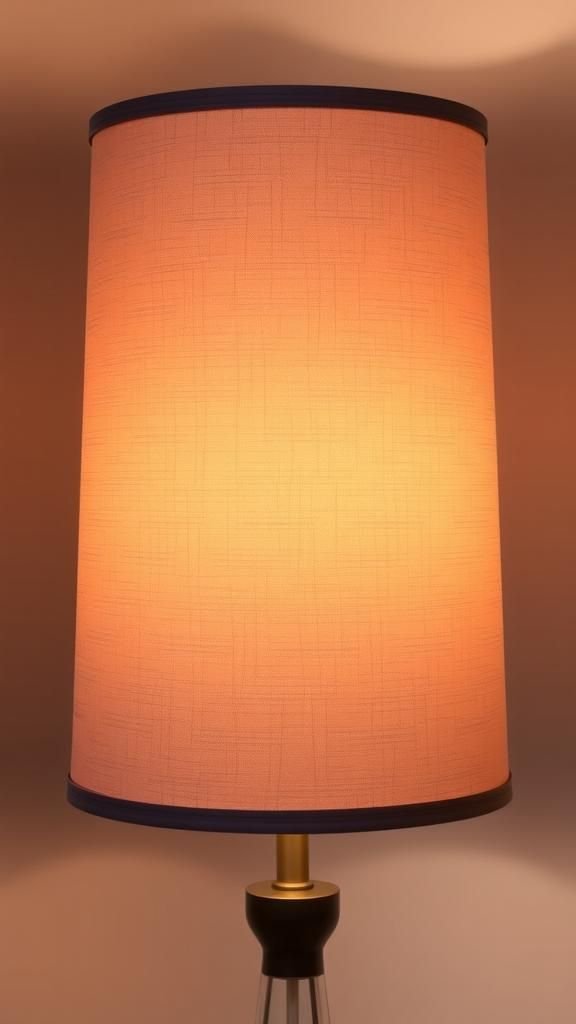
An ombre linen shade drifts from pale at the top to richer tone at the base, echoing twilight gradients. Blush to rose, fog to charcoal, or sand to cocoa each sets a distinct mood.
The fade flatters tall drums and cylinders, stretching the color story for an artful presence. A minimal edge finish keeps attention on the gradient, while a white liner preserves brightness.
It pairs nicely with glass or wood bases and places well on consoles where the transition can be appreciated. As a gift, it suits color lovers drawn to gentle shifts rather than bold contrast.
Steps
- Source pre-dyed ombre linen and align the gradient vertically or horizontally.
- Cut to the template, ensuring the fade sits evenly around the circumference.
- Adhere fabric smoothly, secure the seam, and turn under edges.
- Finish with a slim trim to maintain a clean profile.
Vibrant Embroidered Suzani Shade As Focal Point

Embroidered suzani panels feature sunbursts, florals, and medallions with raised threadwork that glows under lamplight. Coral, saffron, turquoise, and garnet feel festive and layered.
A drum or wide empire gives motifs room to breathe, while a narrow linen trim contains the exuberance. Brass, carved wood, or lacquered bases make confident partners.
On a sideboard with a patterned runner and a low bowl, the shade carries the scene with textile richness. Presented as a gift, it captivates collectors who appreciate folk art and vibrant needlework.
Steps
- Plan motif placement to center a medallion on the most visible panel.
- Cut the panel to the template, avoiding heavy seams at the overlap.
- Adhere carefully to protect embroidery, then secure seam and edges.
- Finish with understated trim to frame the artwork.
Plush Faux Fur Shade For Winter Warmth
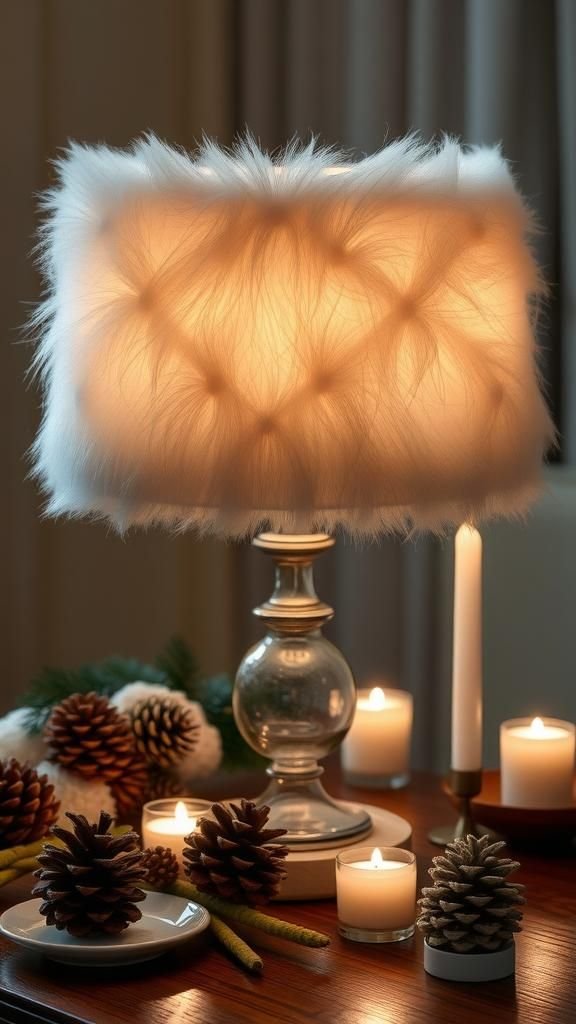
Faux fur wraps a room in playful luxury, softening silhouettes and dampening glare for cozy evenings. Ivory, smoke, or sable tones feel plush, while shorter pile reads neater on smaller shades.
The tactile surface pairs with acrylic, brass, or natural wood bases and invites layered throws and knits nearby. A satin or grosgrain rim keeps edges defined.
As a holiday present, it delights winter hosts and adds a festive wink to mantels or lodge-style rooms. Positioned on a side table with candles and pine cones, it amplifies seasonal comfort.
Steps
- Measure and cut faux fur with the nap running evenly around the shade.
- Apply adhesive in sections and wrap fur, brushing the pile to blend the seam.
- Secure top and bottom edges with strong fabric glue.
- Cap rims with satin or grosgrain ribbon and allow to cure.
Crisp Seersucker Shade For Sunny Summer Rooms

Seersucker’s puckered texture brings breezy charm that feels cool even when the afternoon sun is high. Sky, lemon, or mint stripes brighten kitchens, sunrooms, and beach bedrooms, while the lightweight weave keeps light lively.
Drum or tapered forms suit the linear rhythm, and a white twill trim underscores the freshness. Paired with wicker, whitewashed wood, and citrus accents, the shade hums with summer ease.
Wrapped with striped ribbon and a citrus tag, it makes a cheerful hostess gift that suits bright, casual spaces.
Steps
- Align the stripe direction and cut the seersucker panel to size.
- Adhere fabric around the shade, smoothing without flattening the puckers.
- Secure the seam, fold edges, and apply white twill trim.
- Let the adhesive cure before placing the shade on a lamp.
Metallic Brocade Shade With Old-Hollywood Glam

Brocade woven with metallic threads brings drama and glimmer, ideal for cocktail corners and evening lounges. Antique gold on black, silver on charcoal, or rose gold on blush sets a glamorous tone.
A tapered shade emphasizes the pattern’s rise, while a black or metallic edge keeps the outline sharp. Pairing with smoked glass, lacquer, or marble bases adds polish.
A pale gold liner pushes a warm glow across the room. Presented in a glossy box, it feels like a little piece of theater ready to light up a bar cart or piano top.
Steps
- Cut brocade to the shade template, aligning motifs for symmetry.
- Apply adhesive in sections and wrap brocade, smoothing to prevent ripples.
- Secure seam and edges; clamp lightly along the overlap until set.
- Finish with metallic or black trim along the rims.
Botanical Leaf Print Shade With Fresh Greens

A botanical leaf print refreshes a room with leafy silhouettes and garden hues. Palm fronds, monstera splits, or fern sprays look lively on cotton or linen, whether rendered in emerald, olive, or sage.
A drum or oval shade offers room for the motifs to stretch, while a narrow green or ivory trim outlines the shape. With rattan or white ceramic bases, the look bridges indoors and outdoors.
As a housewarming present, it pairs nicely with a small potted plant. On a console near a window, the leaves glow softly as daylight shifts.
Steps
- Choose a leaf motif and position it so a strong frond faces forward.
- Cut the fabric to the template and adhere evenly around the shade.
- Secure seam and fold under top and bottom edges cleanly.
- Edge with matching trim and allow to set before lighting.